CORSO STAMIRA 9 - ANCONA
CASA DEL MUTILATO
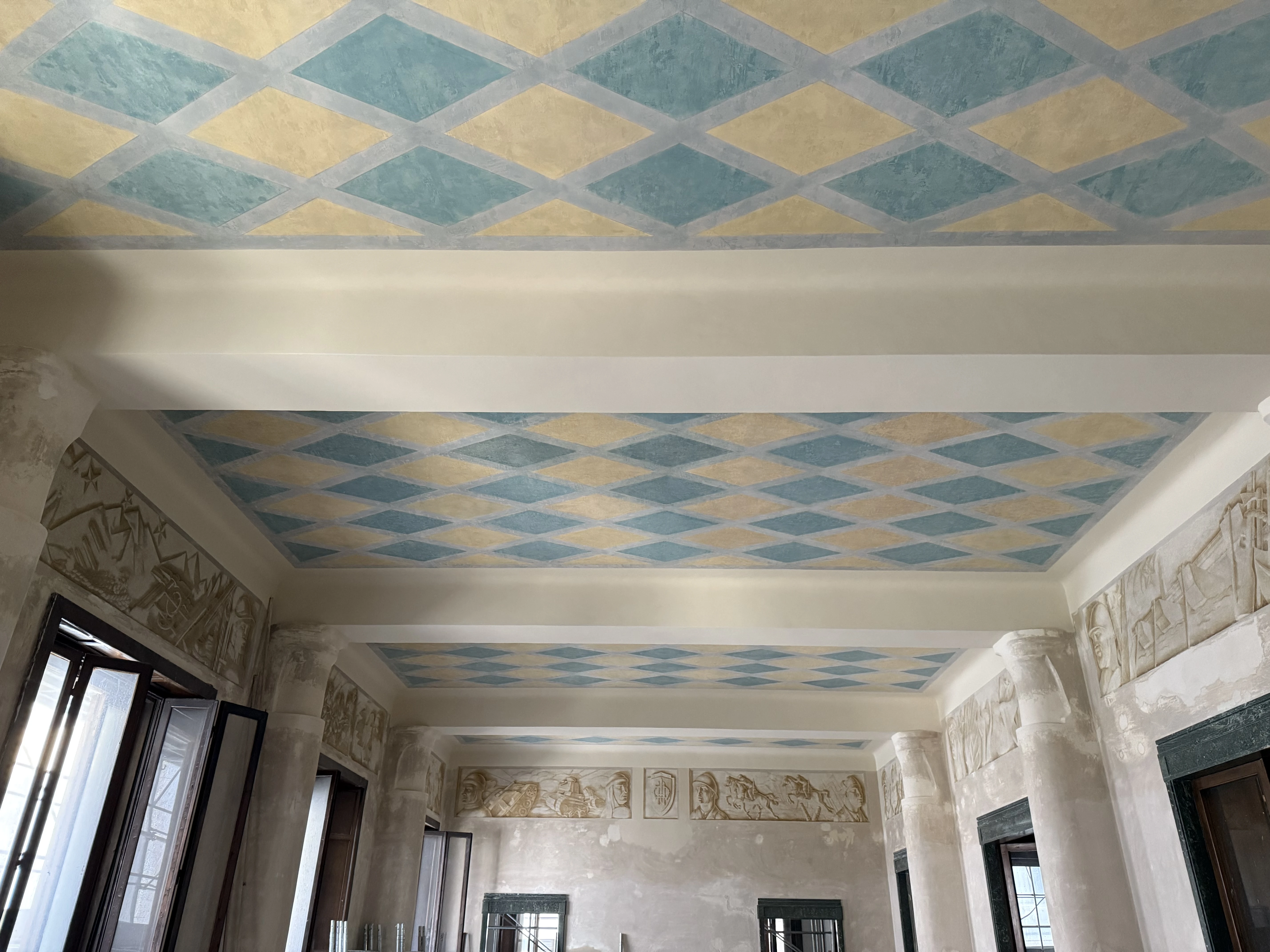
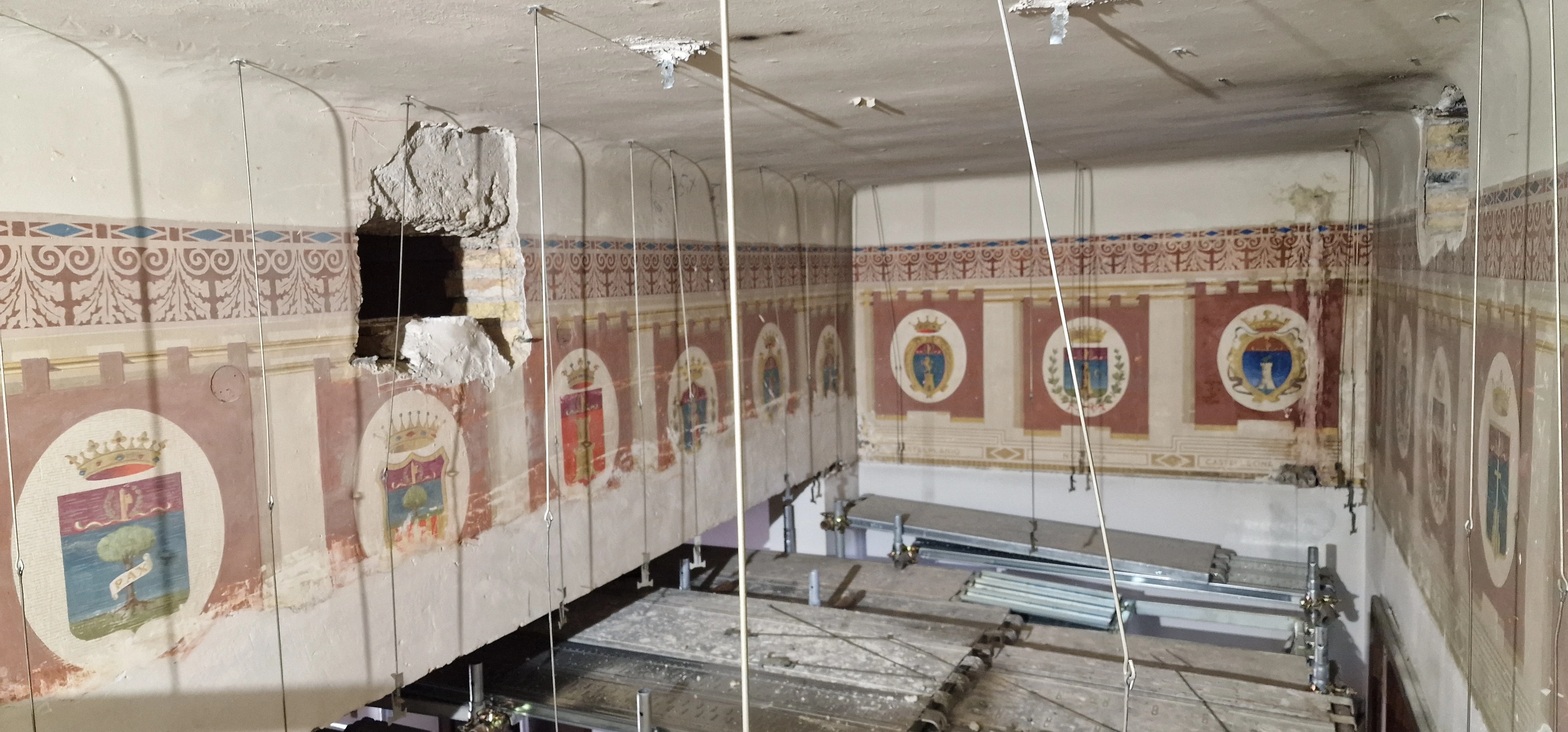
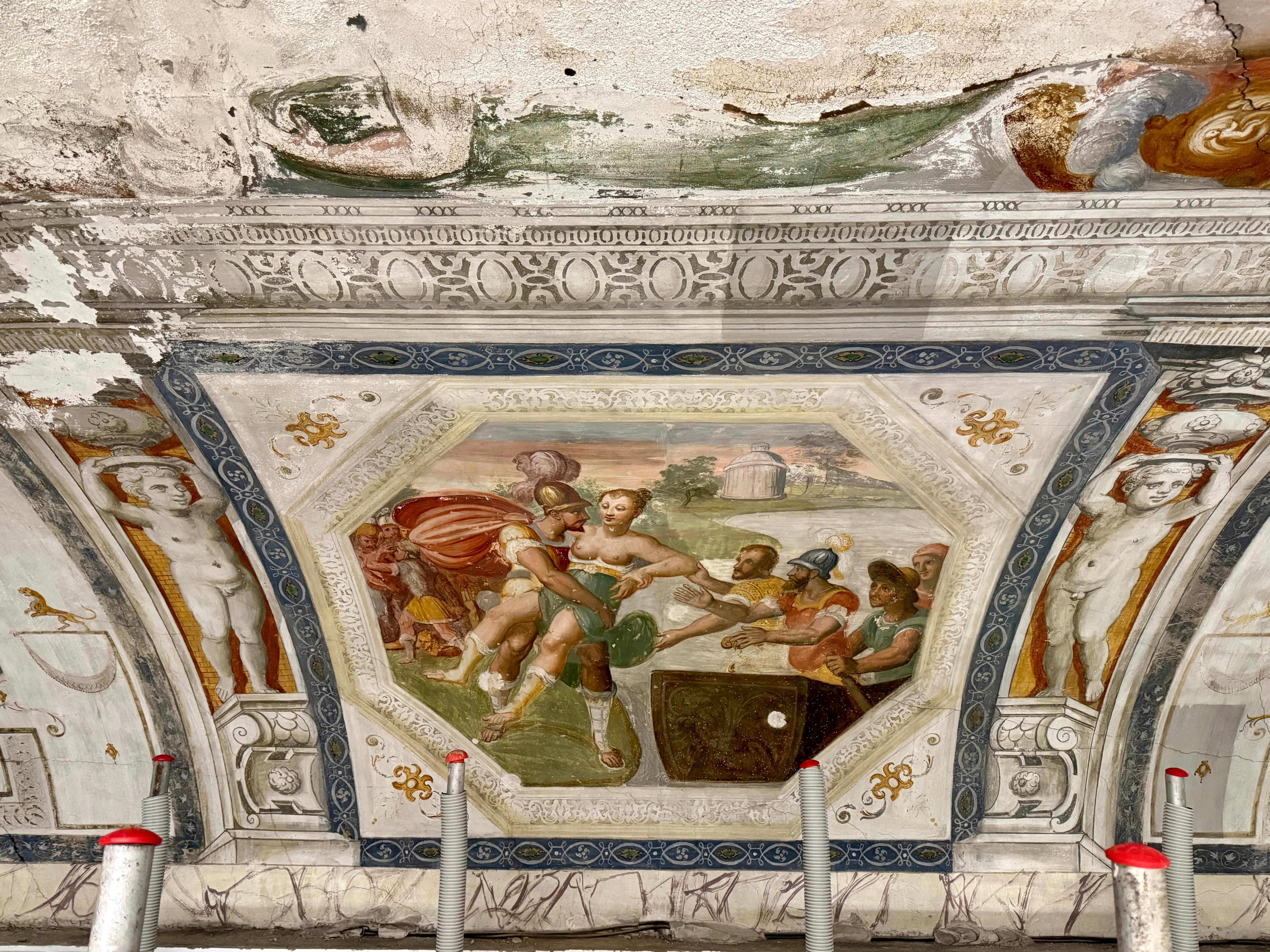
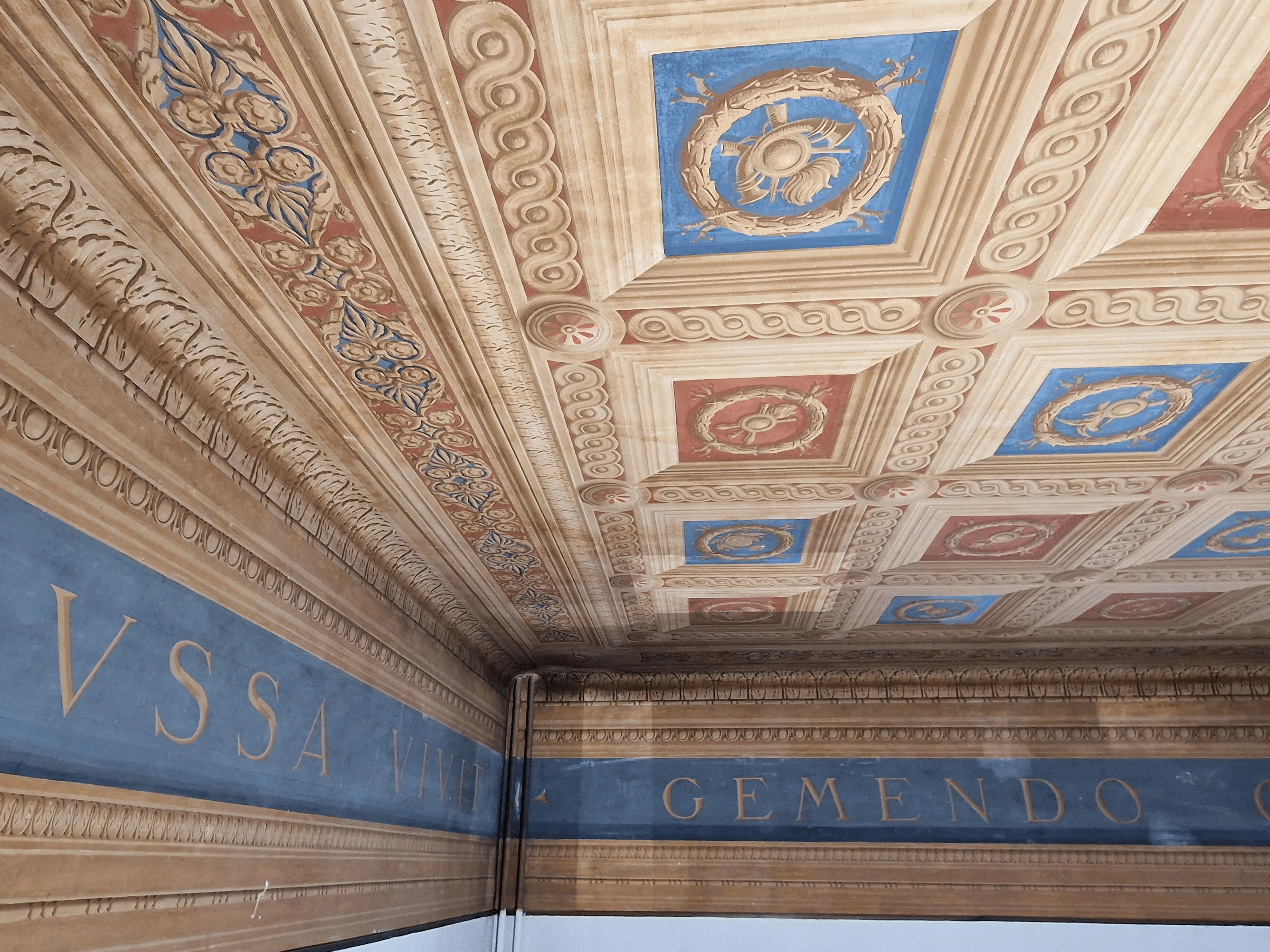
CONSERVATIVE RESTORATION OF THE DECORATED SALONS
Conservative restoration of the decorative apparatus aimed at the safeguarding and recovery of the decorated surfaces, carried out with respect for the original material and the historical-artistic legibility of the overall decorative ensemble.
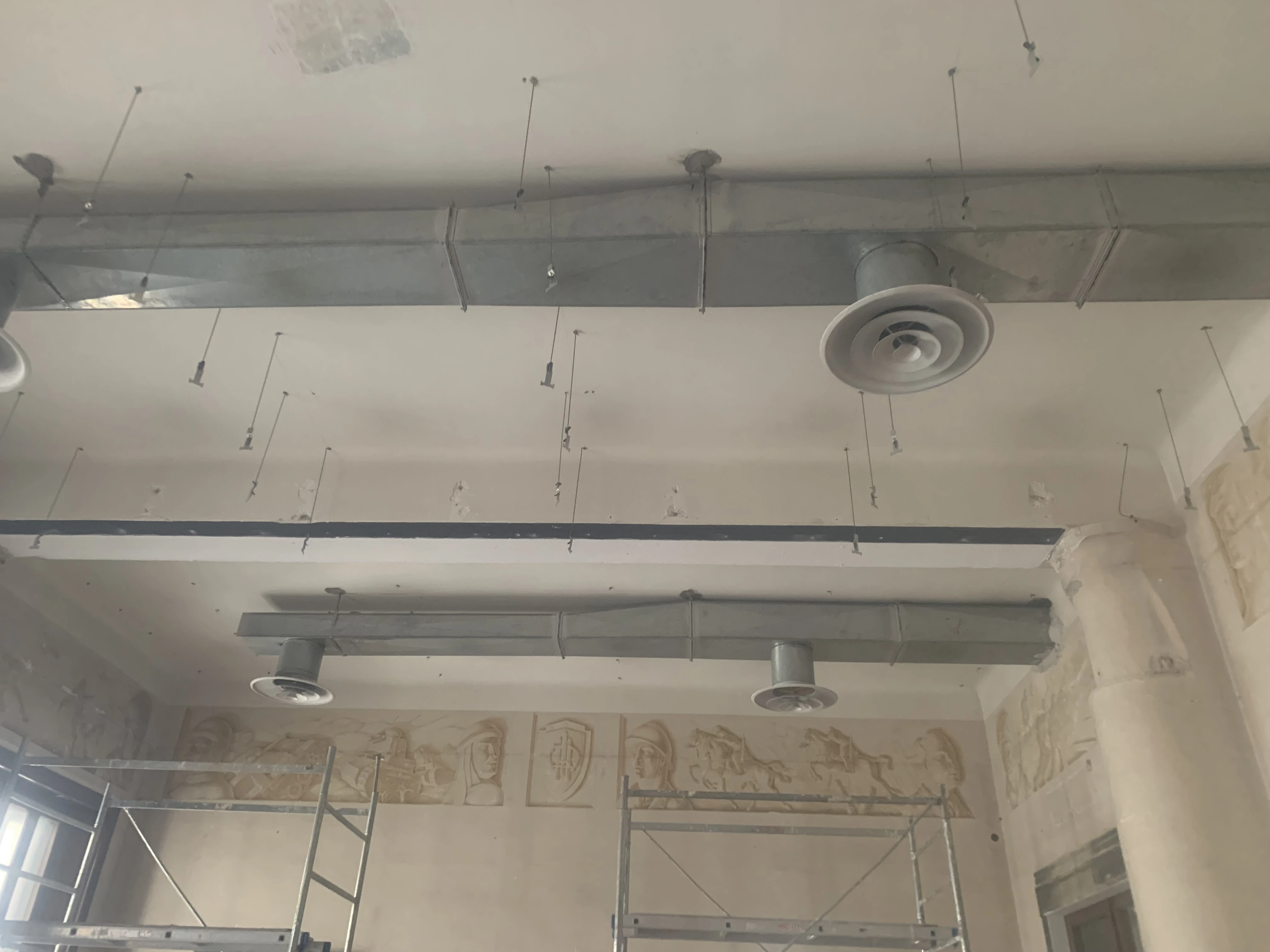
Operational Phases of the Intervention on Decorations and Frescoes
1. Stratigraphic Investigations
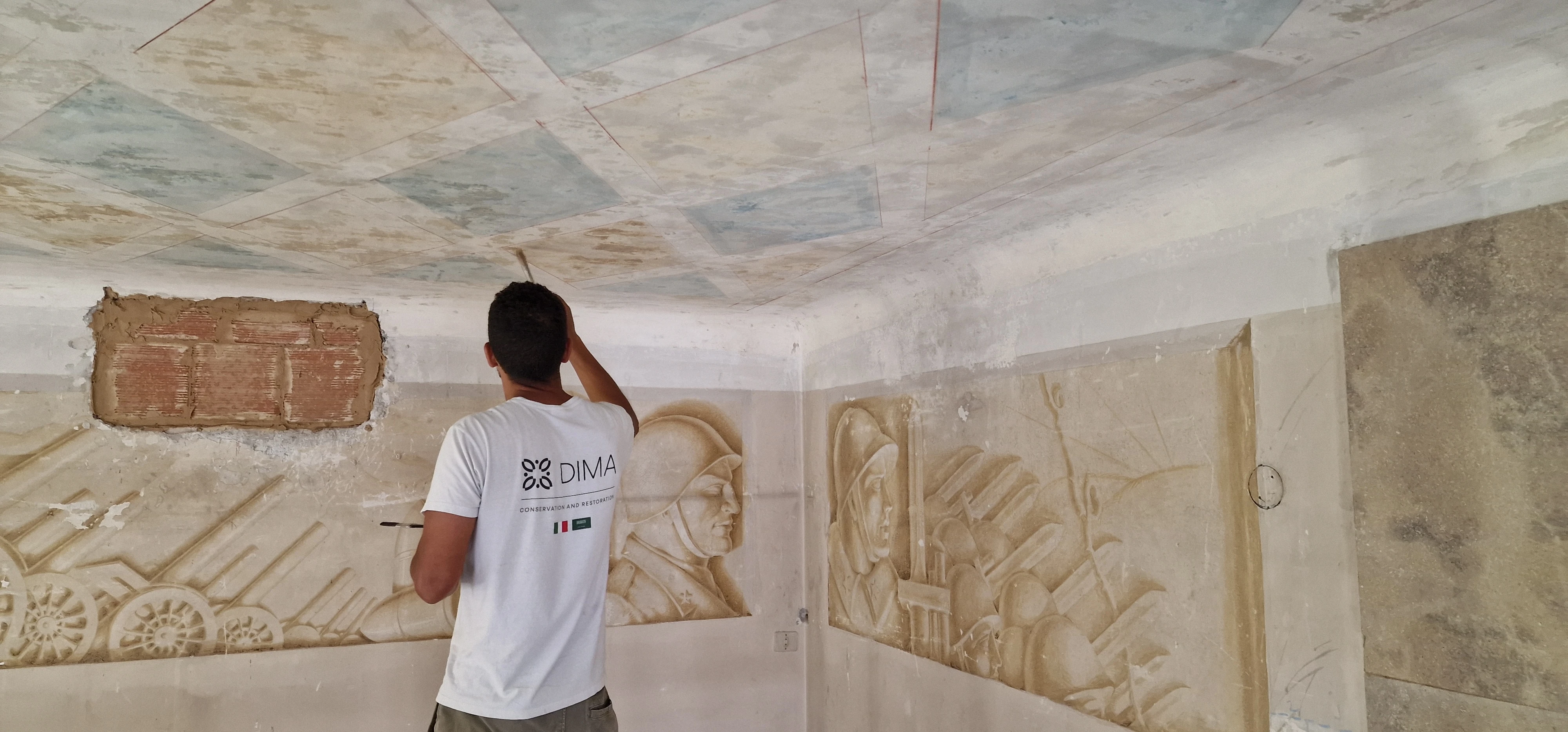
Execution of stratigraphic tests aimed at reading the different decorative phases, understanding the execution techniques, and defining the original color scheme of the frescoed surfaces.
2. Preliminary Consolidation of the Paint Layer
Preliminary intervention to secure portions of the paint layer at risk of lifting or detachment through localized application of suitable chemical consolidants.
The operation was carried out using Japanese paper velination and application of consolidating products to restore adhesion between the paint layer and the plaster support.
3. Cleaning of Painted Surfaces
Preliminary dry cleaning using Wishab sponges to remove incoherent surface deposits.
Localized controlled chemical cleaning with ammonium carbonate poultices was performed to remove more tenacious residues, while respecting the stability and legibility of the paint layer.
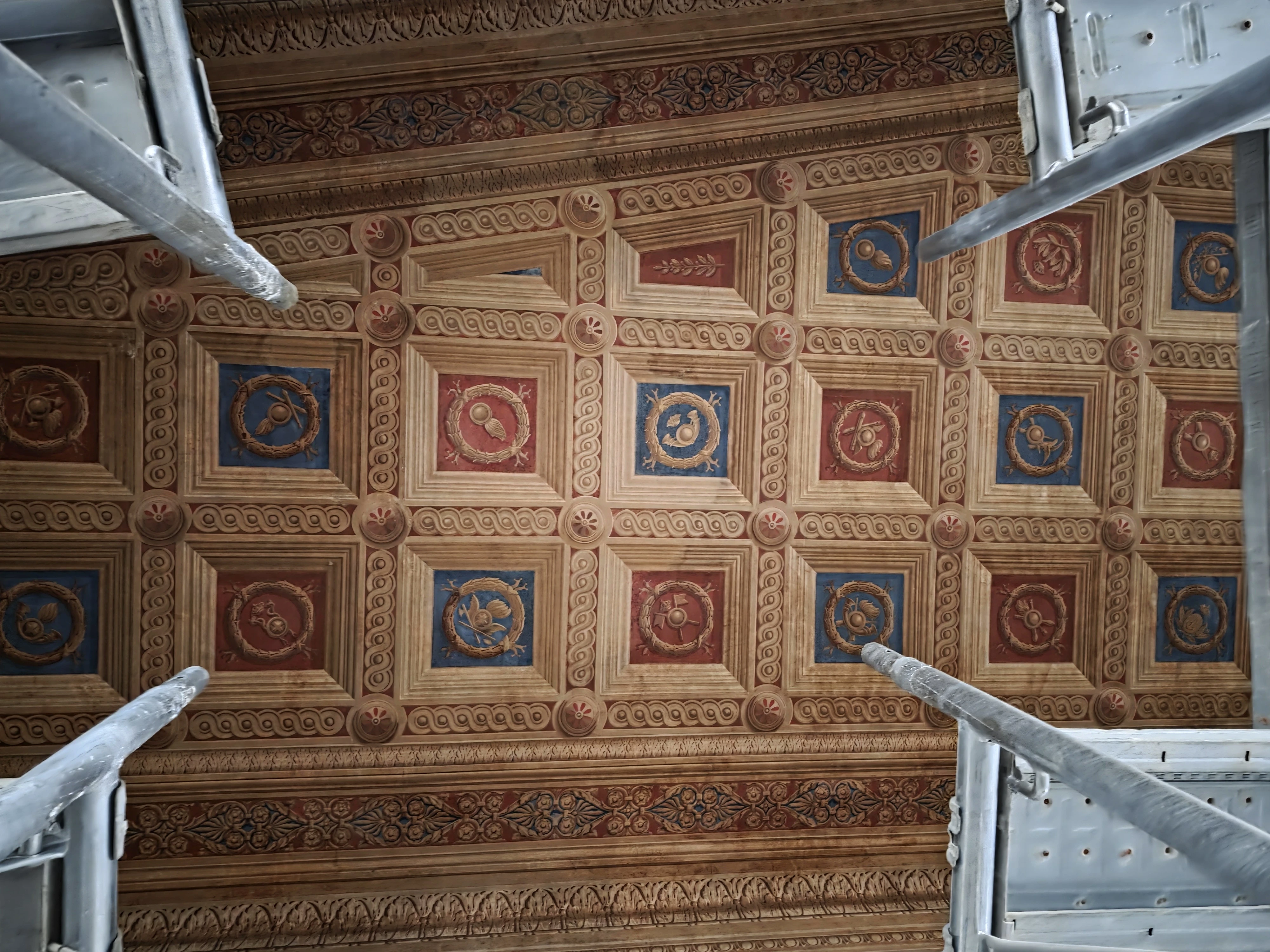
Removal of limewash layers was carried out through mechanical de-limewashing using scalpels, particularly on the decorated ceilings.
4. Consolidation of Plasters and Detached Areas
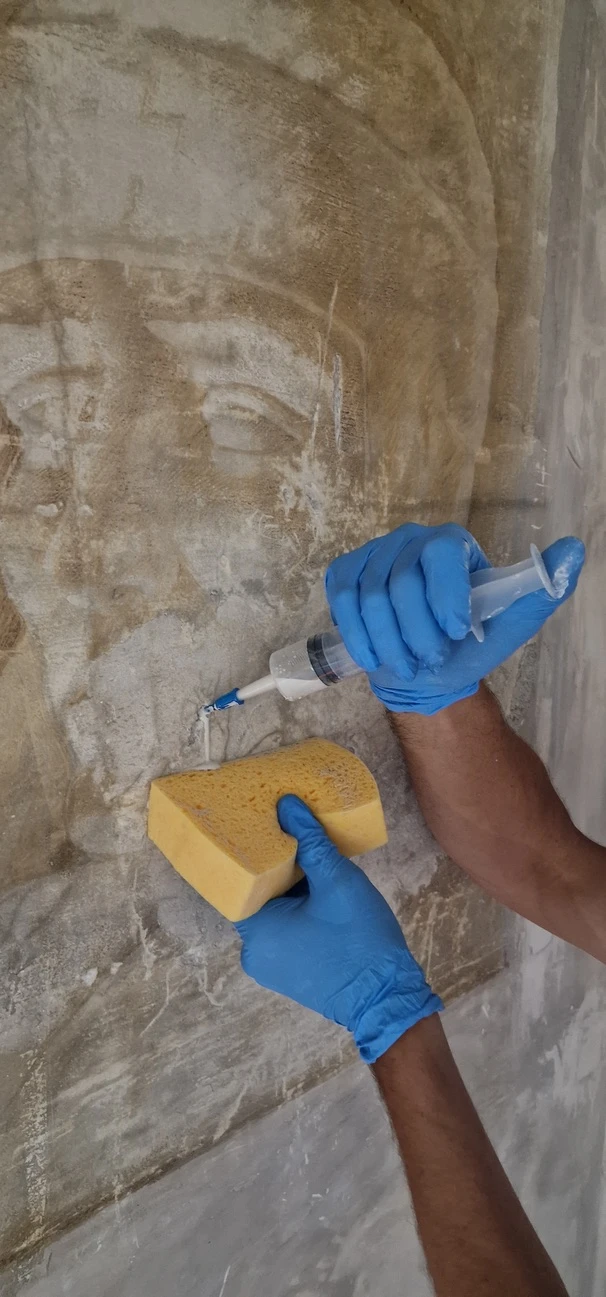
Consolidation of the support using nanolime treatment, aimed at restoring cohesion to the plaster layers and the most compromised areas.
The intervention was integrated with PLM injections in areas of detachment between the masonry support and plaster, to re-establish material and structural continuity between the support and the paint layer.
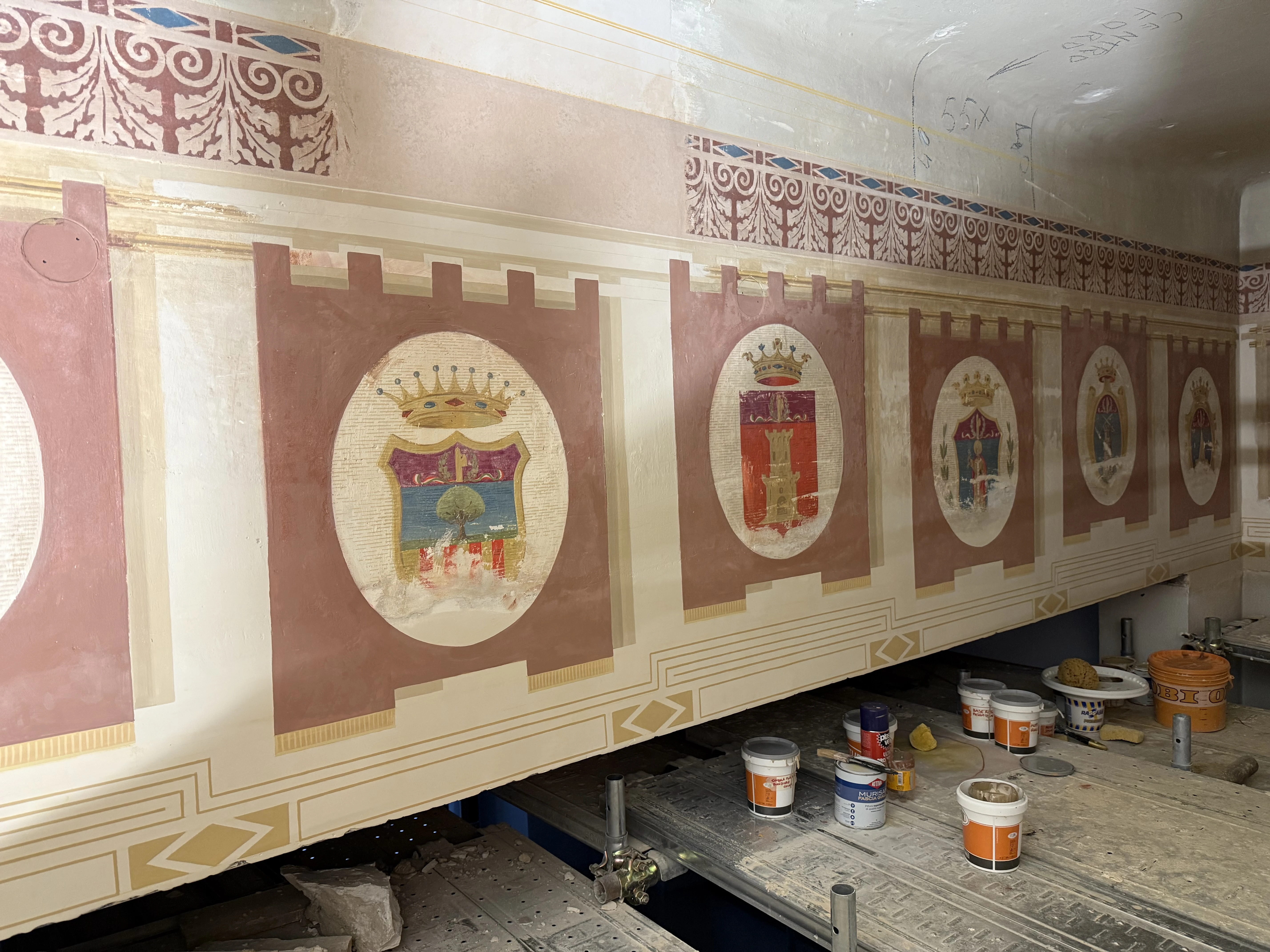
5. Filling of Lacunae
Neutral filling of plaster lacunae with mortars compatible in composition and granulometry, calibrated to ensure recognizability and correct reading of the work without altering its overall color balance.
6. Paint Integration
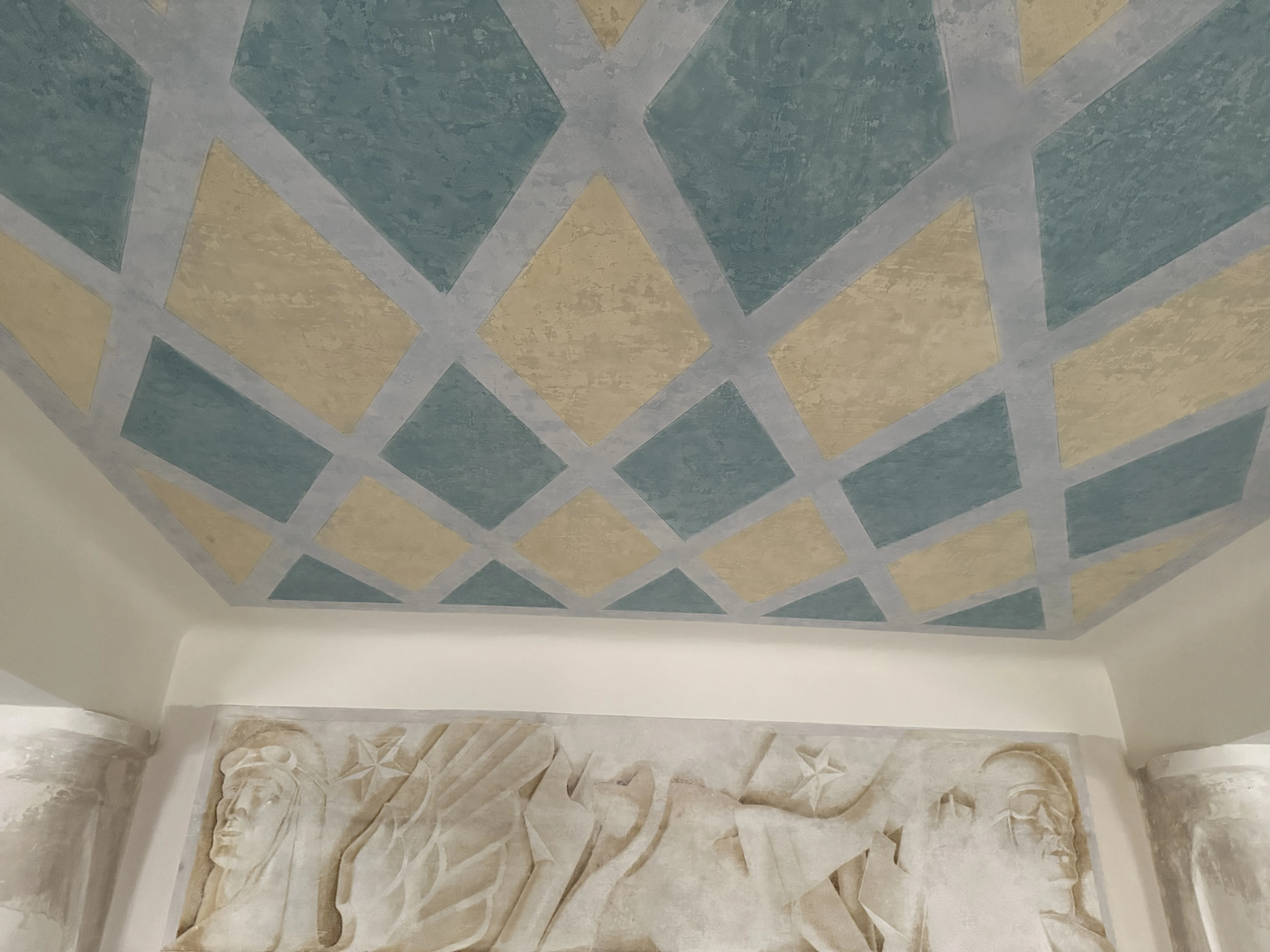
Reintegration of lacunae using a recognizable and reversible technique.
Reconstruction of missing decorations was carried out using the spolvero technique, aimed at restoring visual continuity and the overall perceptual unity of the decorative apparatus.