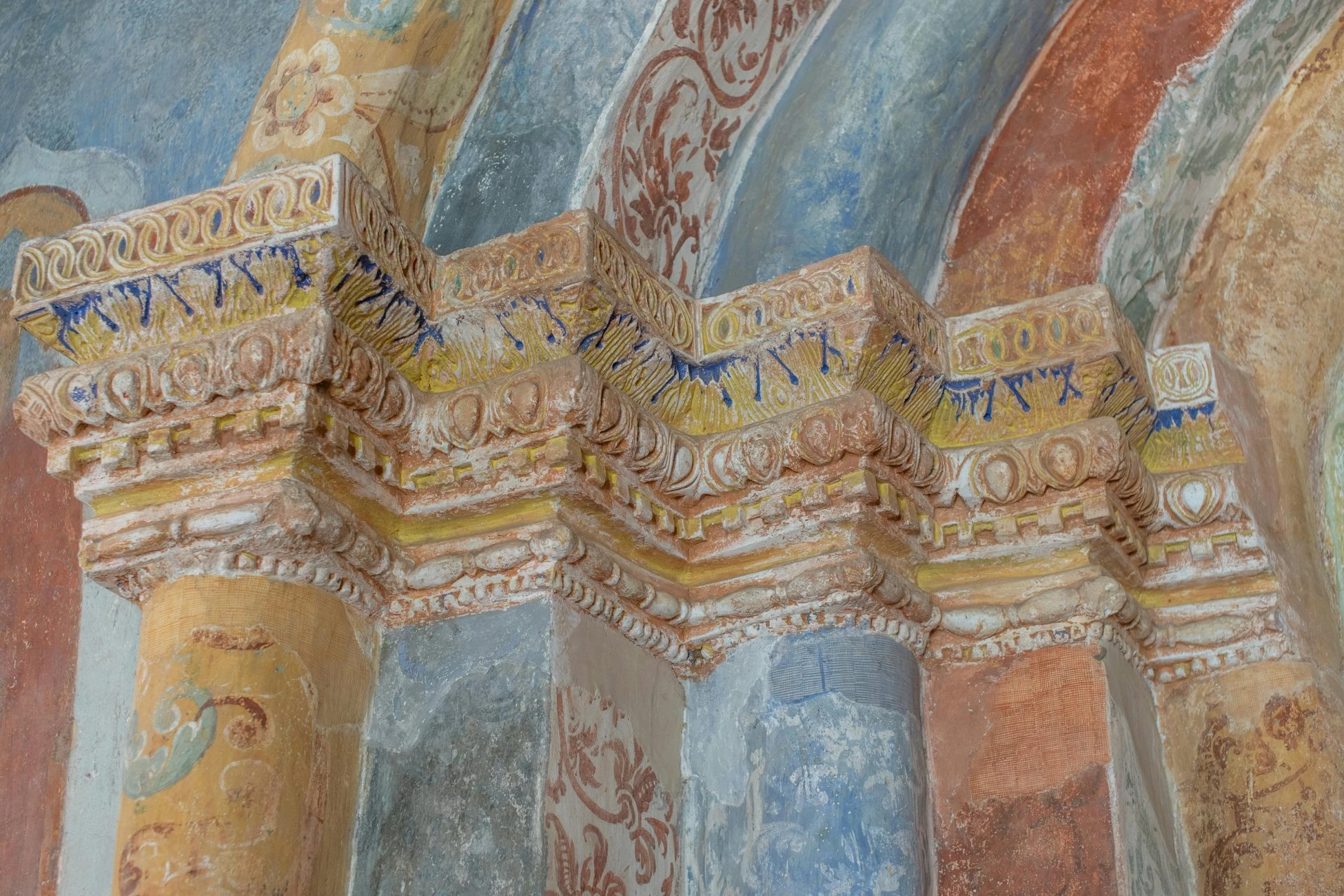
Decorated Surface Restoration and Conservation
Dima specializes in the restoration and conservation of decorated surfaces, working on frescoes, mural paintings, graffito, and ornamental decorations. Each intervention is guided by the need to preserve the artistic expression and material complexity of the surfaces, respecting their original color, texture, and stratifications, while maintaining the legibility of the works without altering their historical character.
Before any intervention, a thorough analysis of materials and pigments is conducted to identify the most suitable, compatible, and reversible techniques. Dima’s approach combines scientific rigor with aesthetic sensitivity, ensuring precise interventions that restore balance, legibility, and integrity to decorated surfaces.
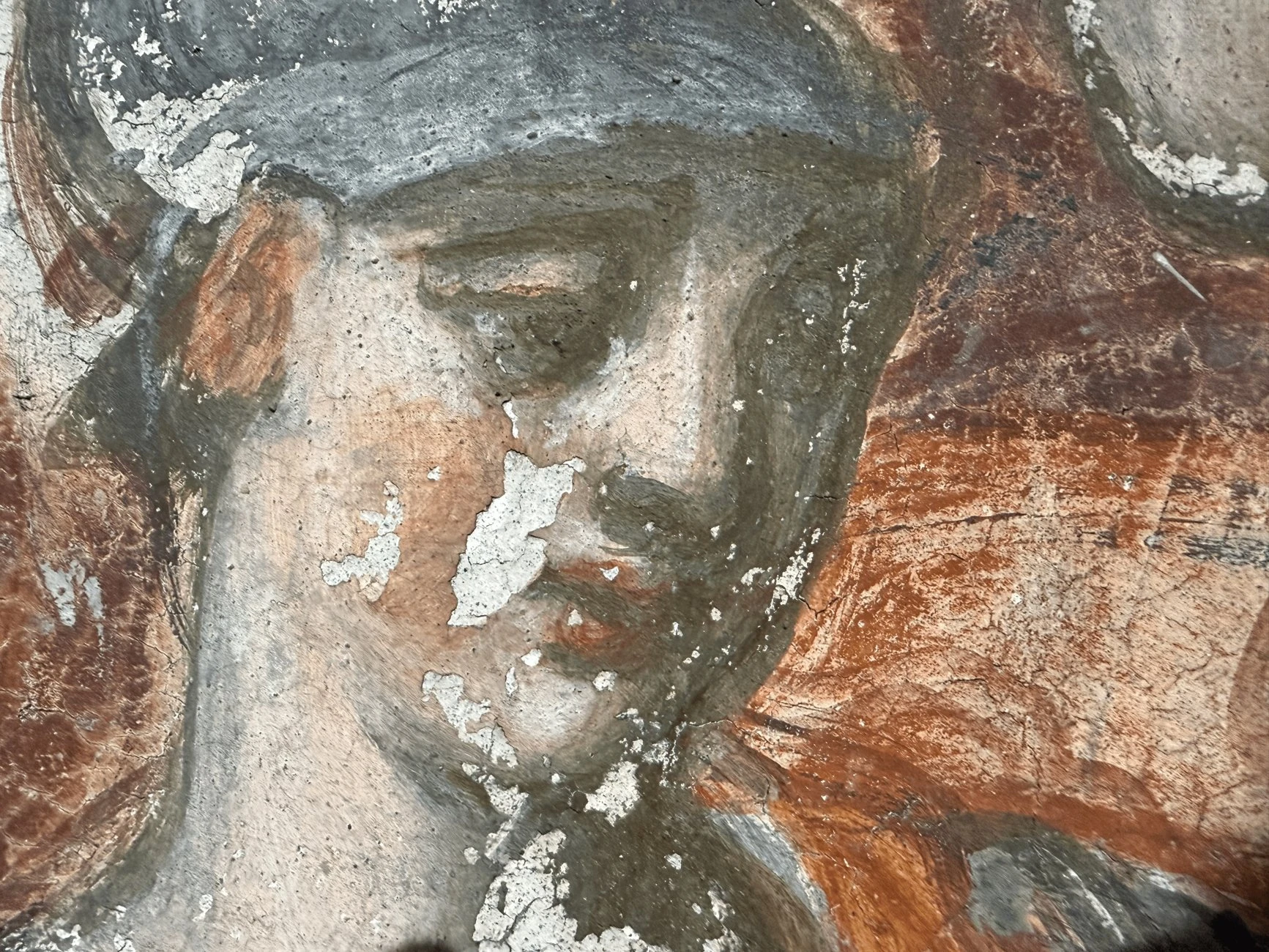
1.DIAGNOSTICS AND PRELIMINARY SURVEYS
We rely on a highly qualified team of experts, diagnosticians, and restorers who, thanks to their in-depth knowledge of materials and the characteristics of each work, identify the most suitable techniques for its conservation.
Alongside diagnostics and preliminary surveys, we carry out stratigraphic tests, material analyses, and targeted sampling to reconstruct the conservation history of the work and understand its degradation processes. This allows us to distinguish the different layers and guide the intervention toward the recovery of the original material.
We operate through a structured model, using compatible materials and methodologies while constantly monitoring each phase of the restoration, ensuring precise interventions that respect the historical and material integrity of the work.
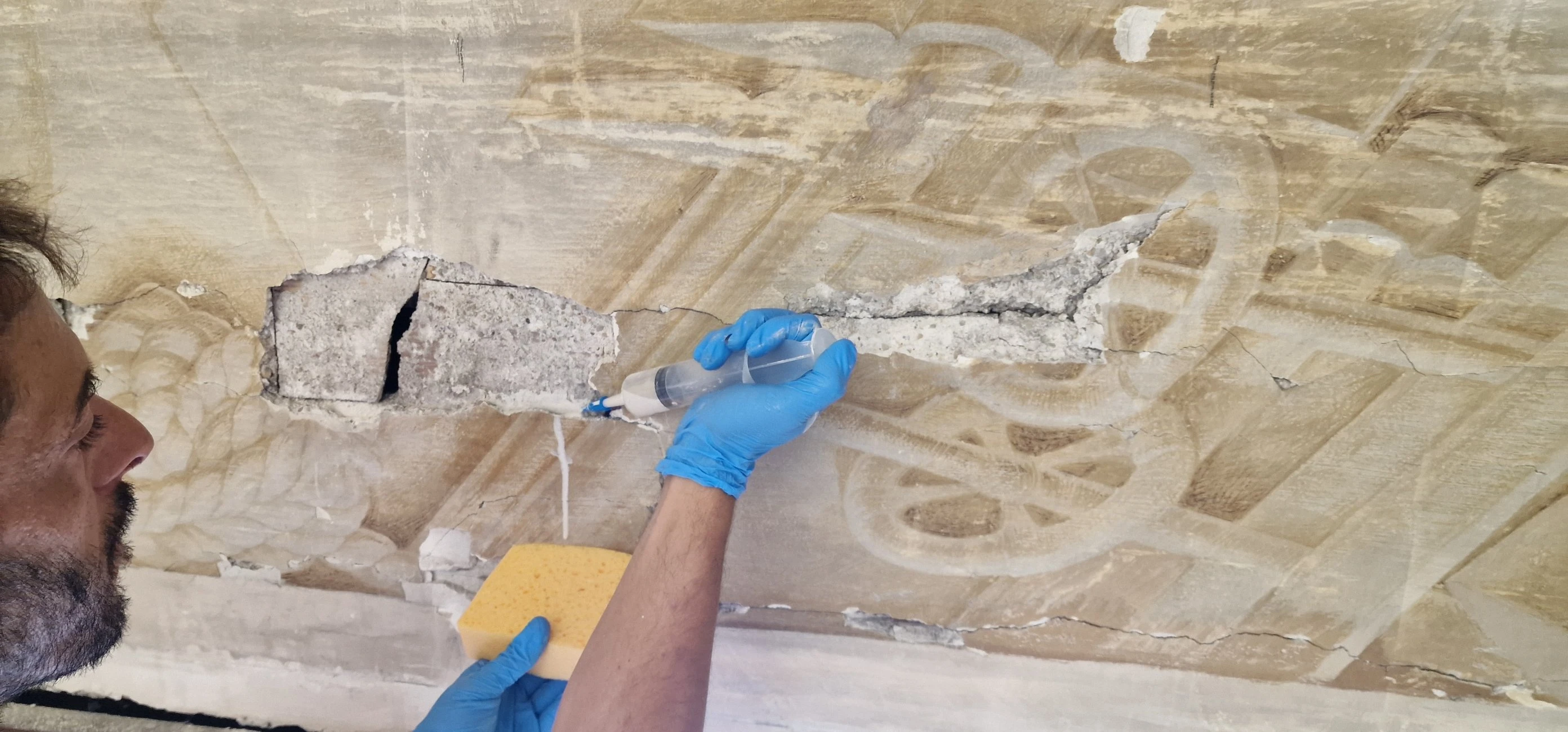
2.CONSOLIDATION
Consolidation addresses the need to restore stability and the physical-mechanical properties of decorated surfaces compromised by degradation, intervening on lifting, detachment, decohesion, and loss of the painted layer.
Dima works with specific procedures, tools, and materials selected to enhance the cohesion of preparatory and pictorial layers and re-establish adhesion between the different levels that make up the decorated surface.
The solutions adopted are technologically advanced and calibrated to the characteristics of each intervention, ensuring effective, durable operations that fully respect the historical and material integrity of the decorative apparatus.
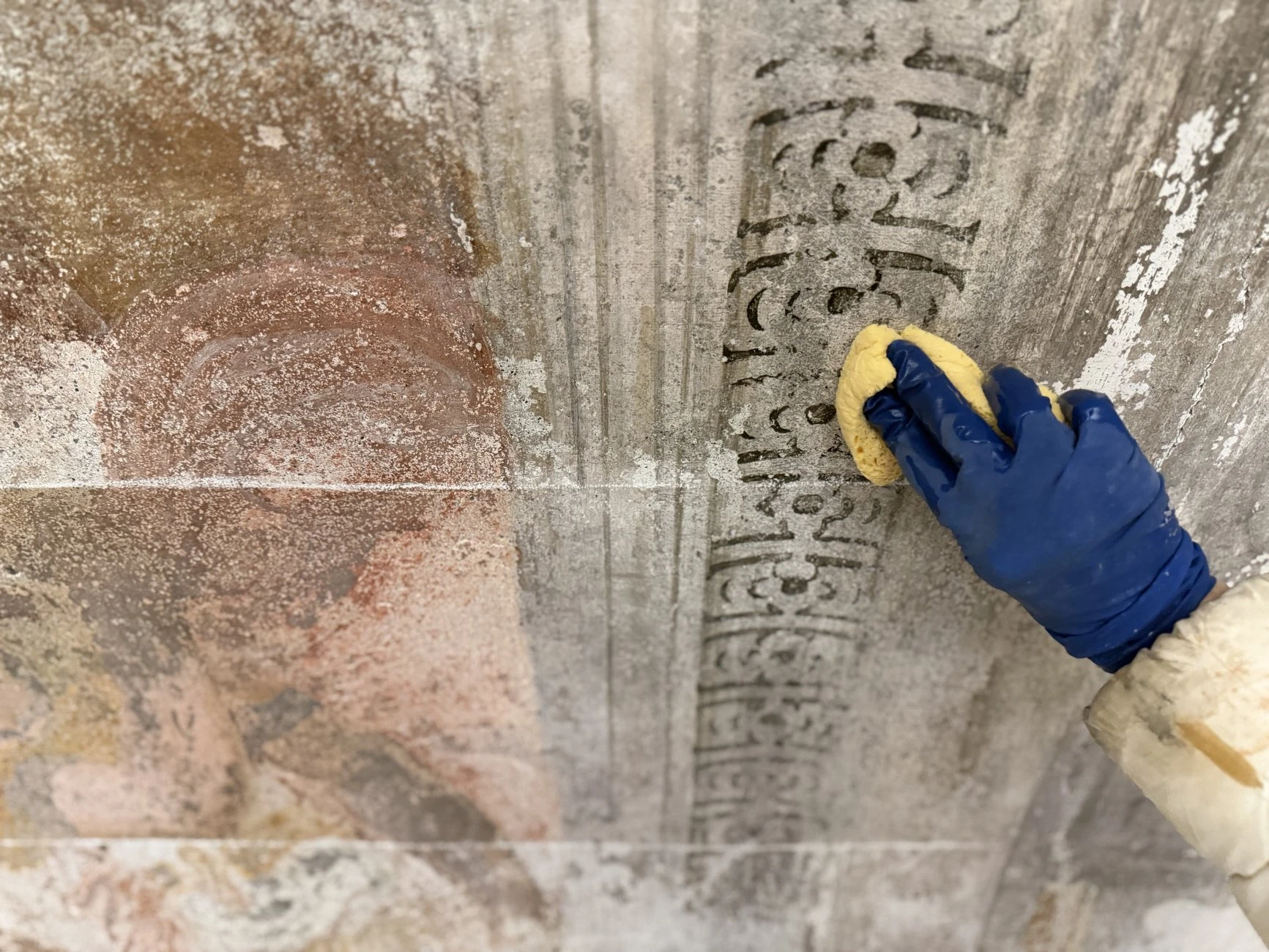
3.CLEANING
Cleaning of decorated surfaces is a fundamental step for their proper conservation. It must be carried out with utmost care, removing surface deposits, altered overpaints, inappropriate patinas, and residues from previous interventions, without compromising the paint layer or altering the historical-artistic readability of the work.
The selection of the most suitable method is based on preliminary sampling and cleaning tests, essential to identify the safest and most effective technique according to the nature of the pigments, binders, and preparatory layers. Dima employs advanced tools and technologies, integrated with carefully selected chemical agents and solvents, calibrated to the specific requirements of each intervention.
Thanks to the use of constantly updated materials and methodologies, every cleaning operation is targeted, controlled, and fully respectful of the material integrity and color balance of the decorated surfaces.
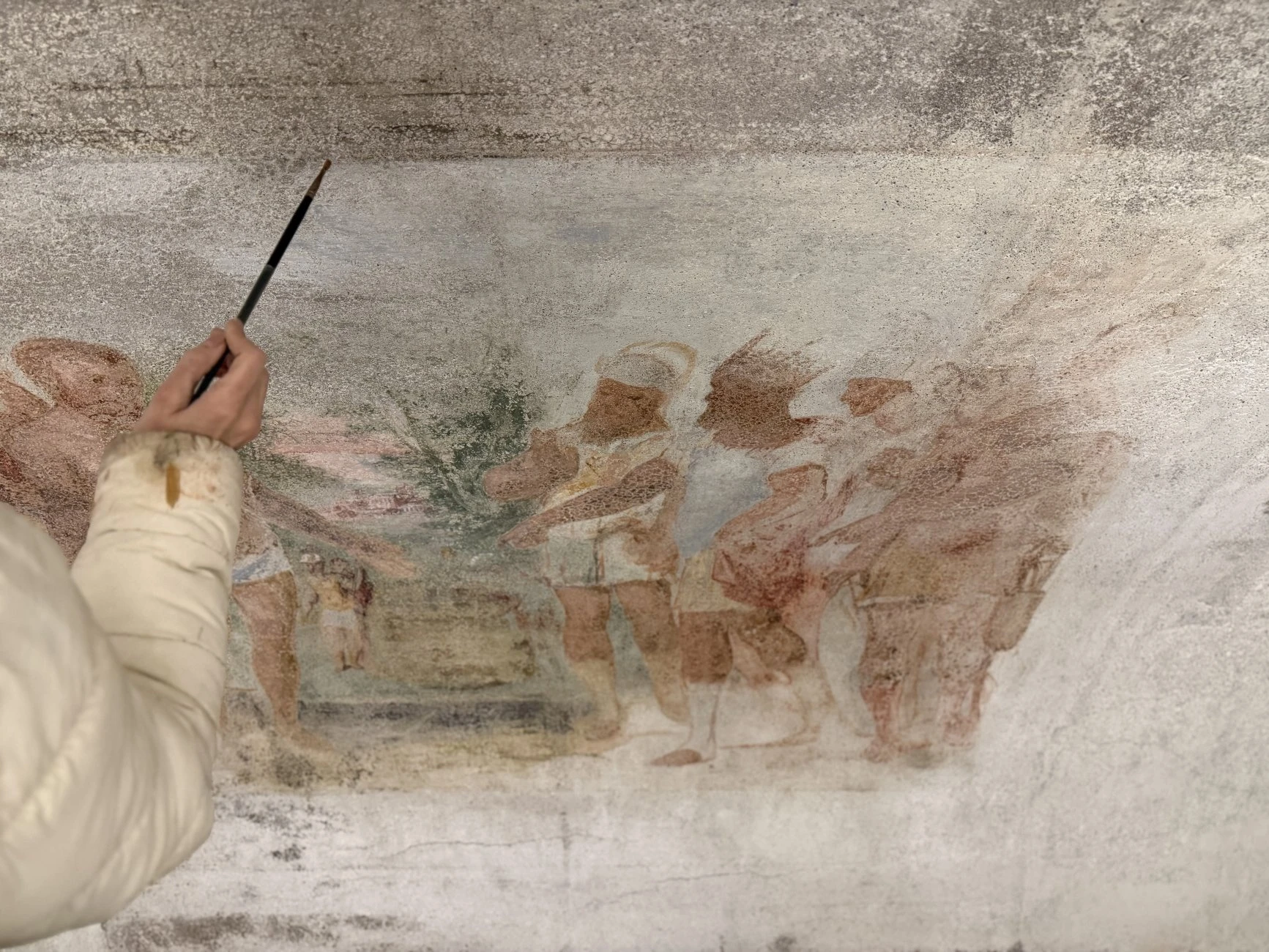
4. INTEGRATION AND PROTECTION
The intervention on decorated surfaces aims to restore the material and visual continuity of the painted apparatus, enhancing its stability and legibility while fully respecting the authenticity of the work.
All operations are carried out using compatible and reversible materials, while aesthetic choices — filling of losses, execution of reintegrations, texture, and color tone — are determined case by case to ensure balance and coherence with the original surface.
At the end of pictorial reintegration, when necessary, a final protective treatment may be applied, pre-tested and calibrated, designed to safeguard the surface against future degradation and ensure its long-term stability and durability.